
- Subscribe
- Premium
- C-Suite
- Insiders
- M&A
- Gurus
- Spinoffs
- Buybacks
- More
I am still trying to get my head around flip-flopping insiders.
Who are flip-floppers?
Flip-floppers are company insiders (CEO, CFO, directors, 10% owners, etc.) who purchased and sold shares within a period of time. For example they purchased shares on January 3, 2025 and sold those shares by April 28, 2025. They can also be insiders that were selling and then suddenly flip to buying instead.
The flip-flopping penalty
The SEC likes to discourage insiders from using the information they possess to make short-term profits and as a result, requires them to give back any profits from “swing” trades that happened within a six month period. Every once in a while, we come across insider transactions where the insider indicates that the transaction violates the Short-Swing Profit rule and that the insider is going to return any profits from the prior trade back to the company.
Flip-flopping insiders are sending us a signal that they think the prevailing winds have changed and that they are willing to give up some short-term profits to make even more money down the road.
Three recent examples of flip-floppers from just this week:
We don’t often come across flip-flopper transactions. To have three show up in the same week is highly unusual but then again the market over the past few week is anything but unusual.
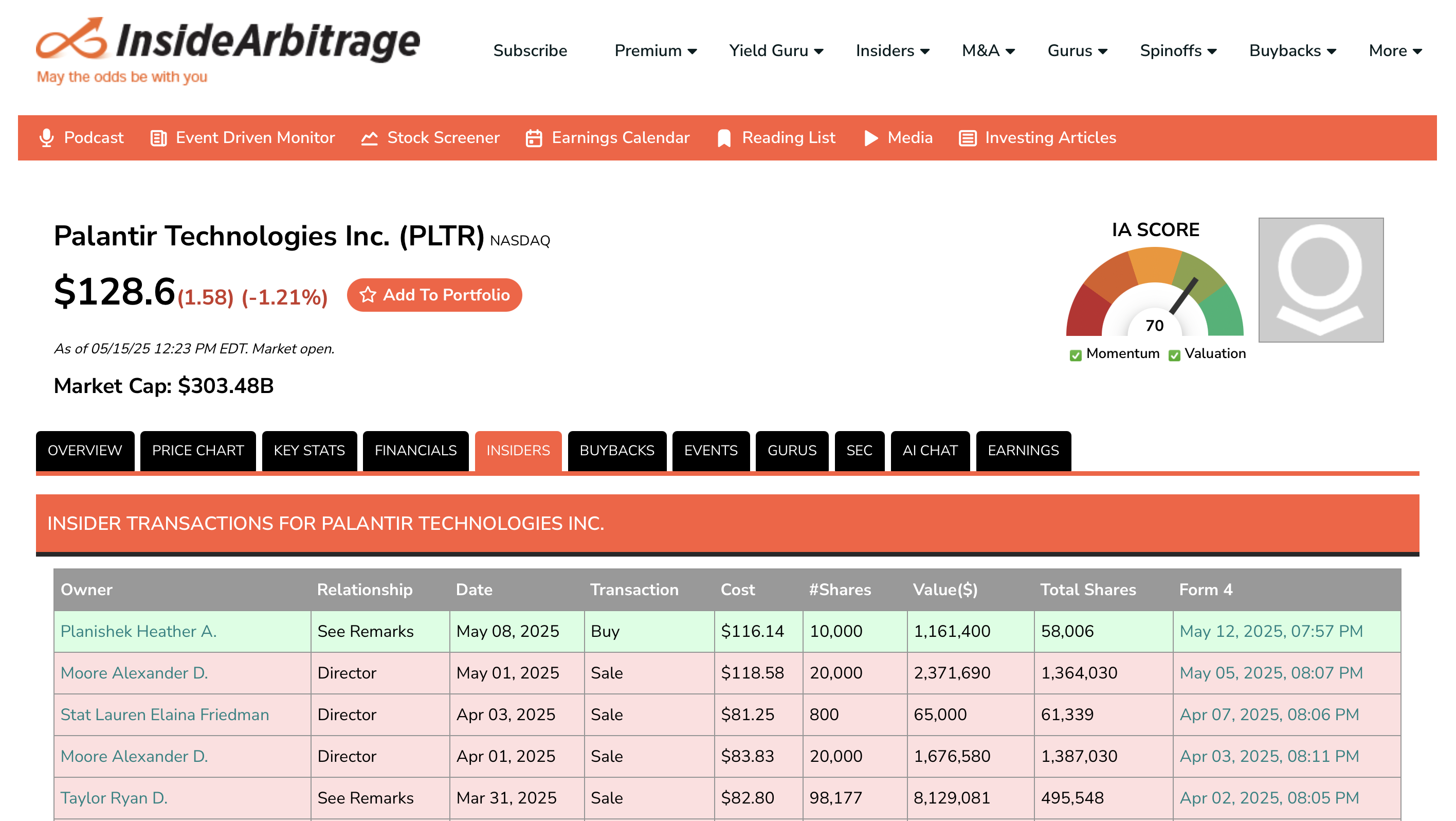
1. Palantir (PLTR)
Market cap: $303B
Former Chief Accounting Officer Heather Planishek purchased 10,000 shares of the company. She paid an average price $116.14 per share and put $1.16 million of her own cash on the line.
We were surprised that someone at Palantir was buying shares at these elevated levels.
We were even more surprised to see that a former insider was filing a form 4 with the SEC and then realized that she was required to do so because of her sales in February 2025. The footnotes of the filing indicated that she knew this was a matched sale and agreed to pay Palantir $9,401 for violating the short-swing profit rule.
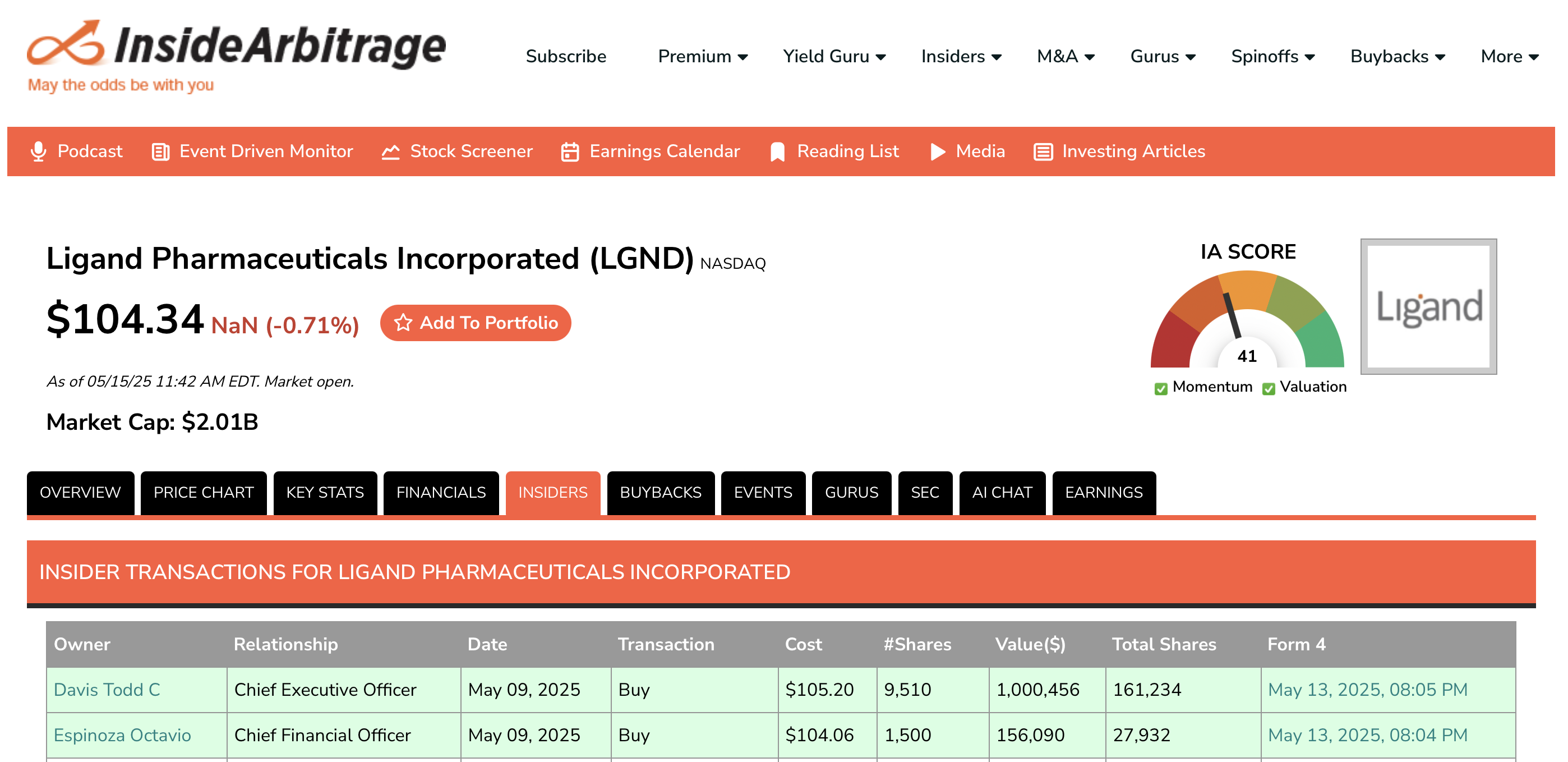
2. Ligand Pharmaceuticals (LGND)
Market Cap: $2B
CFO Octavio Espinoza purchased 1,500 shares of this biotech company. He paid an average price of $104.06 per share and put $156,090 of his money to work. The footnotes of the filing indicated that he also knew this was a matched sale and agreed to pay Ligand $18,795 for violating the short-swing profit rule.
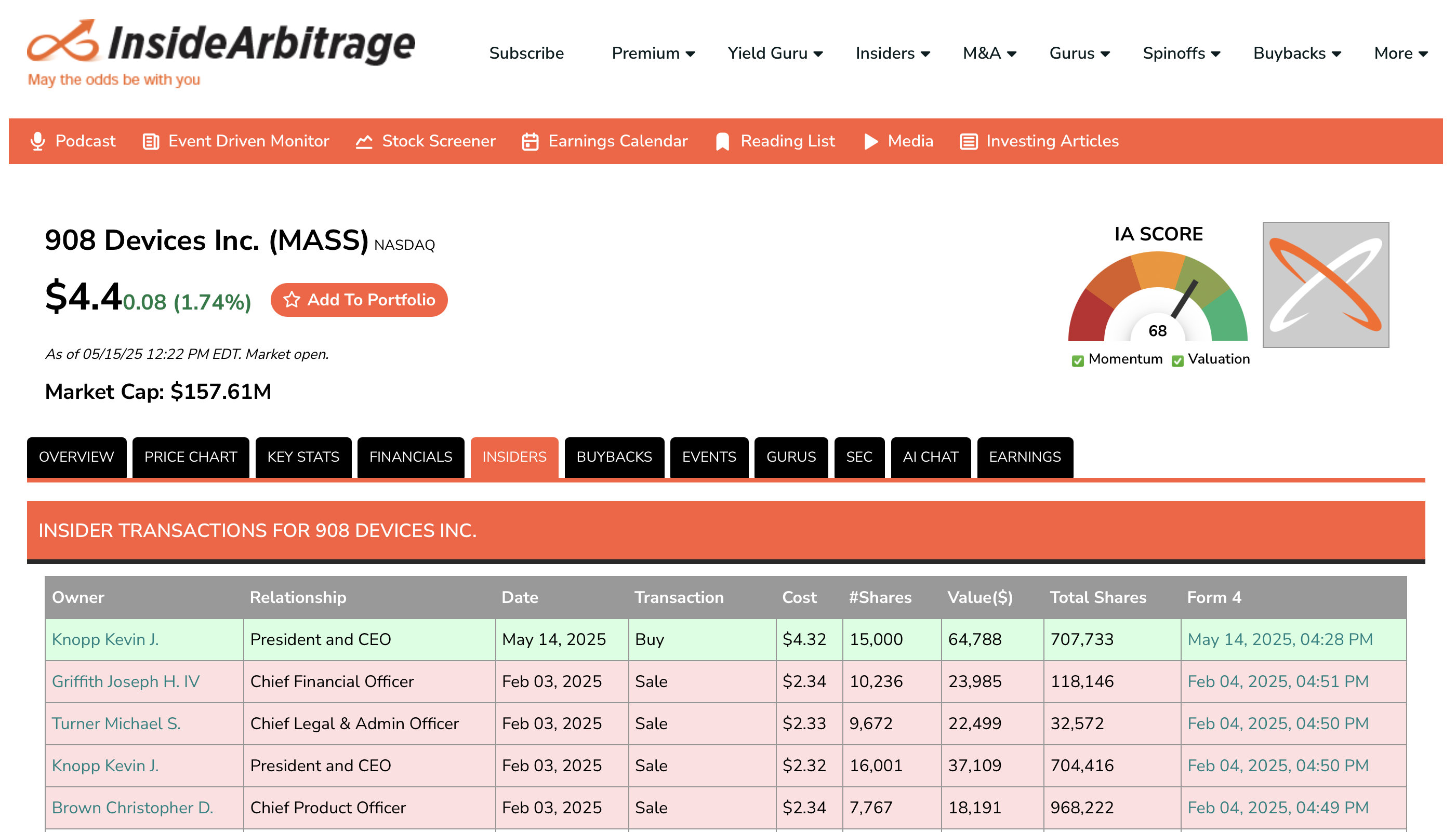
3. 908 Devices (MASS)
Market Cap: $158M
CEO Kevin Knopp purchased 15,000 shares of this desktop mass spectrometry devices manufacturer. He paid $4.32 per share to purchase $64,788 worth of stock. Once again he was aware of the violation of the short-swing rule but the footnote mentions that the prior sale was related to the vesting and settlement of RSUs and hence there was no profit to disgorge back to the company.
I still need to do quantitative work by looking at potentially a decade or more of insider transactions to see what kinds of signals these flip-flopping insiders send. For now we are tracking these insiders on a custom screen in InsideArbitrage that is aptly called Flip Floppers.
Voluntary Disclosure: No position in any of these companies. Please do your own due diligence before buying or selling any securities mentioned in this article. We do not warrant the completeness or accuracy of the content or data provided in this article.